Have a question




Kidney Stone Treatment in Johor
Advanced diagnosis and minimally invasive treatment to relieve pain and restore kidney function.
Diagnosis Overview
Kidney stones can cause severe pain and affect urinary health if not treated early. At Gleneagles Johor, Dr. Zainal Adwin offers comprehensive evaluation using modern imaging and diagnostic tools to identify stone size, location, and type, helping determine the most effective treatment plan.
About Dr. Zainal
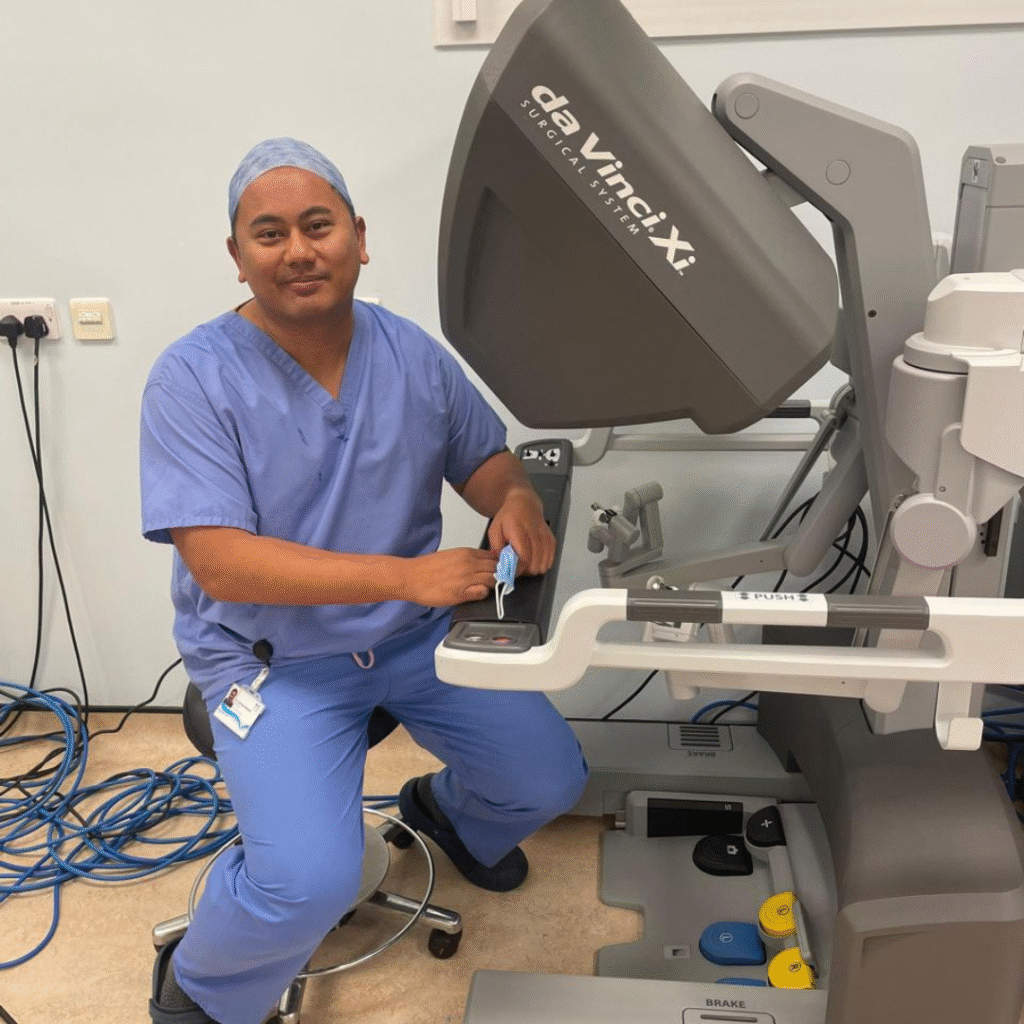
Dr. Zainal Adwin is an experienced Urologist and Robotic Surgeon in Johor, specialising in advanced kidney stone management. With expertise in minimally invasive techniques, including ureteroscopy, lithotripsy, and robotic kidney surgery, he provides personalised treatment focused on safety, comfort, and long-term kidney health.
What Are Kidney Stones and How They Develop
Kidney stones are hard mineral deposits that form inside the kidneys when substances like calcium, uric acid, or oxalate crystallise in concentrated urine. These crystals may remain small or grow into larger stones that travel through the urinary tract, sometimes causing blockage and severe pain.
Stone formation is influenced by multiple factors, including dehydration, high salt intake, limited water consumption, metabolic disorders, urinary infections, and genetic predisposition. While some stones pass naturally, others may require medical intervention to prevent complications such as infections, kidney swelling, or repeated stone formation.
Symptoms of Kidney Stones
Sharp pain in the lower back or side
Pain spreading to the abdomen or groin
Blood in the urine
Frequent urge to urinate
Burning sensation during urination
Nausea or vomiting
Difficulty passing urine
Cloudy or foul-smelling urine
Diagnosis Options
Accurate diagnosis helps identify stone type, size, and location.
Urine and Blood Tests
Assess mineral levels and detect infection or metabolic causes.
Ultrasound Imaging
Non-invasive scan to locate stones and assess kidney function.
CT Scan
Provides detailed imaging to detect stones precisely, even small ones.
Stone Analysis (After Passing/Removal)
Helps determine stone composition for prevention planning.
Treatment Options
Treatment depends on stone size, location, symptoms, and recurrence risk.
Medication and Hydration Guidance
Supports natural stone passage and reduces discomfort.
Shockwave Lithotripsy (ESWL)
Uses sound waves to break stones into smaller fragments that pass naturally.
Ureteroscopy
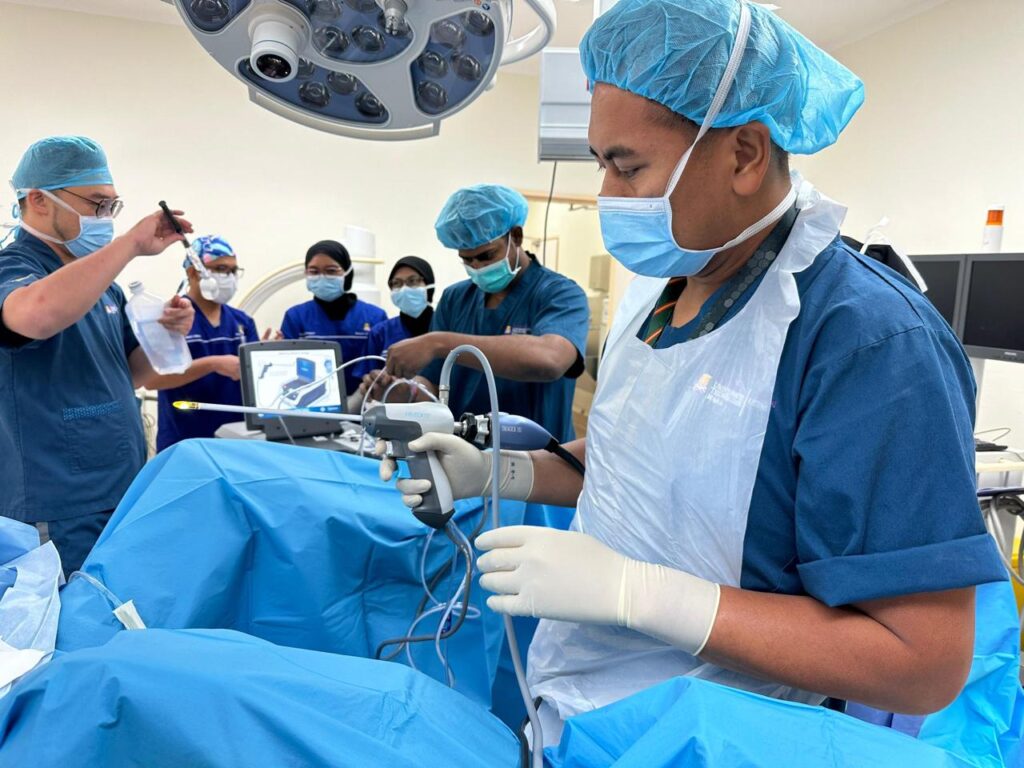
A thin scope is inserted through the urinary tract to remove or break stones directly.
Robotic or Laparoscopic Kidney Surgery
Used for stones linked to structural abnormalities or when other methods are not suitable.
About Dr. Zainal
At Gleneagles Johor, Dr. Zainal Adwin offers comprehensive kidney stone care supported by modern technology, minimally invasive surgery, and personalised follow-up plans. His approach emphasises patient comfort, accurate diagnosis, and long-term prevention strategies to maintain healthy kidney function.
What causes kidney stones?
Dehydration, high salt intake, genetics, urinary infections, and metabolic conditions can contribute to stone formation.
Do all stones require surgery?
No. Small stones may pass naturally with medication and hydration. Treatment depends on size, symptoms, and blockage.
What is recovery like after ureteroscopy or lithotripsy?
Most patients resume normal activities within a few days, depending on the procedure and overall health.
Can kidney stones come back?
Yes, recurrence is common. Follow-up care, diet changes, and stone analysis help prevent future stones.
When should I see a urologist?
Seek medical care if you experience severe back or abdominal pain, blood in urine, fever, or difficulty urinating.
Your Health, Our Commitment Hear from Our Patients
"I am grateful to Dr.Zainal and his surgical team for performing a TURP surgery on my prostate enlargement at Gleneagles Hospital JB on 21/7. I will certainly recommend him to those whom I know if they need to go for such treatments or surgeries like mine. A word of thanks to the nurses who looked after me at Ward 710B too."
Phua Teck Hock
"My family and I are very grateful to Dr. Zainal Adwin for the excellent robotic surgery he performed. He was kind, patient, and explained the procedure in detail. The recovery was quicker than expected. Truly a top-class surgeon!"
Aaron Farhan
"My wife recently underwent a kidney tumor removal robotic surgery on February 8th, performed by Dr. Zainal Adwin Bin Zainal Abidin at Gleneagles Medini Hospital. From start to finish, the experience was exemplary."
Nazim Tajuddin
"Dr Zainal patiently gave great medical advice for me to remove my kidney stone naturally, which i preferred as i very much dreaded surgery.
Thank you so much Doctor for your care and consideration. Highly recommended!"
Ben K
"Dr. Zainal… excellent urologist with great communication skills. He explains everything clearly. I was made to understand my problem and treatment options. The clinic & hospital is comfortable, and gives a great healing vibes and environment. I felt reassured and well-cared for throughout my visit. Highly recommend Dr. Zainal!"
Ahmad Tarmizi Mohammad